

Table of Contents
The New Golden Era of Middleweight Supersports
The traditional 600cc inline-four supersport class—once defined by screaming 16,000 rpm powerbands and bone-jarring ergonomics like the legendary Yamaha YZF-R6—has effectively been redefined by stringent emissions and evolving rider demands. Replacing those uncompromising track missiles is a far more versatile, torque-laden breed of middleweight sportbikes designed for both thrilling apex carving and real-world street usability.
At the pinnacle of this revolution stand two titan contenders: the eagerly awaited, all-new Yamaha YZF-R9 and Noale’s benchmark apex-hunter, the Aprilia RS 660. While both machines target track-day enthusiasts and weekend canyon-carvers looking for premium liter-bike electronic suites without the intimidating 200-horsepower price or weight penalty, their mechanical recipes could not be more distinct.
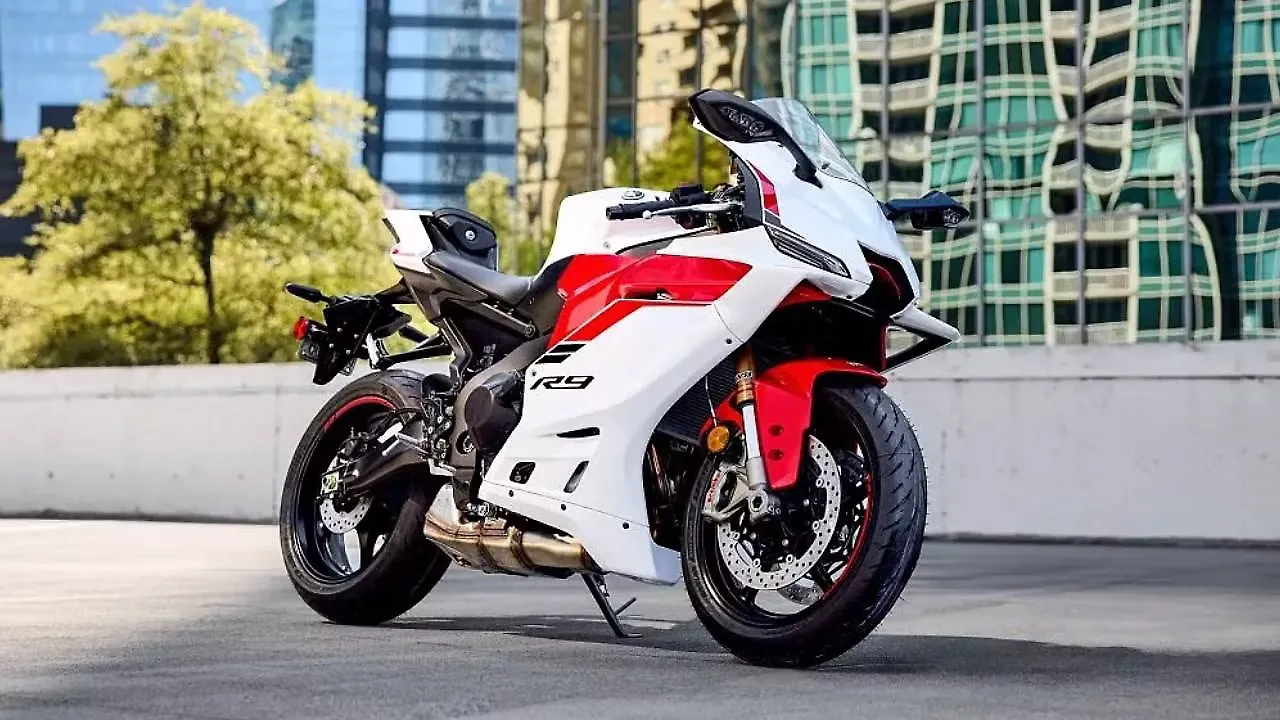
Powertrain Clash: 890cc CP3 Triple vs 659cc Parallel-Twin
The ideological divide between these two machines begins right between the frame spars:
Yamaha YZF-R9: Yamaha has transplanted its charismatic, race-proven 890cc liquid-cooled CP3 crossplane inline-three engine into a dedicated supersport chassis. Utilizing forged pistons, fracture-split connecting rods, and a 120-degree crankshaft, the CP3 delivers a linear surge of immediate torque accompanied by one of the most intoxicating, guttural intake howls in modern motorcycling.
Aprilia RS 660: Aprilia took the front bank of cylinders from its monstrous RSV4 1100 V4 engine to create a compact, forward-facing 659cc parallel-twin with a 270-degree firing order. This design mimics the rhythmic throb and instantaneous rear-tire hookup of a 90-degree V-twin while remaining exceptionally narrow between the rider’s knees.
Horsepower, Torque & Real-World Power Delivery
On the dyno, displacement gives Yamaha a decisive power advantage:
- Yamaha YZF-R9: Cranks out 119 hp at 10,000 rpm and a muscular 93 Nm (68.6 lb-ft) of torque at 7,000 rpm. Over 80% of peak torque is readily accessible from just 3,500 rpm, meaning you don’t need to drop two gears to pass traffic or pull hard out of tight hairpins.
- Aprilia RS 660: Generates 105 hp at 10,500 rpm and 67 Nm (49.4 lb-ft) of torque at 8,500 rpm. While yielding 14 hp and 26 Nm to the larger-displacement Yamaha, the Italian twin loves to rev freely and features a punchy top-end surge that rewards skilled gear selection.
On high-speed circuits with long straights, the Yamaha R9 will pull away with superior terminal velocity and relentless mid-range drive. However, in tight, technical chicane complexes, the Aprilia’s lighter rotating engine mass translates to effortless side-to-side transitions.
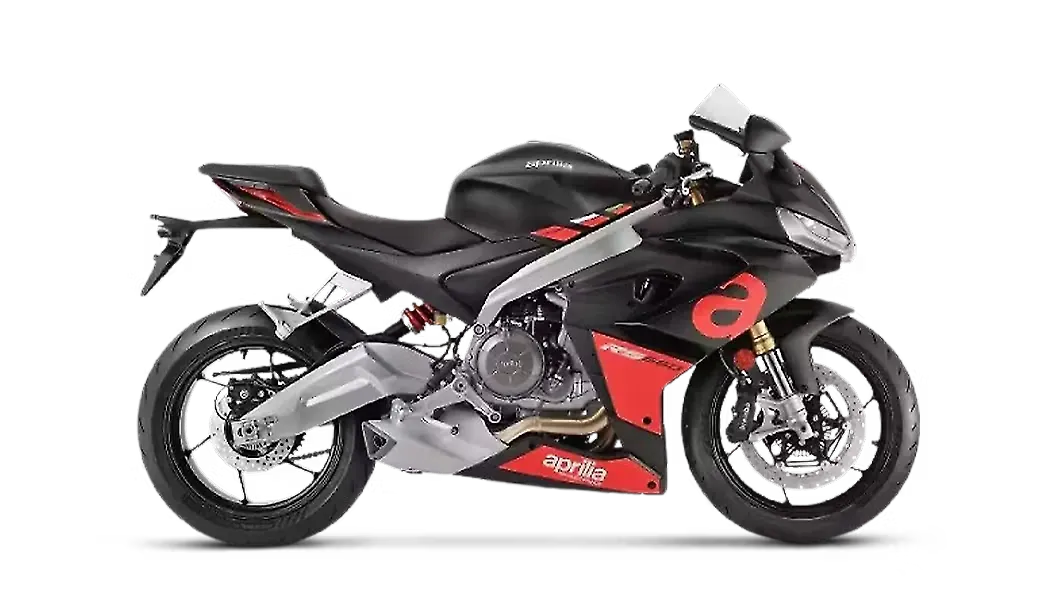
Chassis, Weight & Handling: Deltabox Stiff vs Italian Featherweight
Where the Yamaha holds the power advantage, the Aprilia retaliates aggressively on the scales:
The Aprilia RS 660 weighs just 183 kg (403 lbs) ready-to-ride with a full tank of fuel. Its die-cast aluminum twin-spar frame utilizes the engine casing as a fully stressed member, resulting in an exceptionally compact wheelbase of 1,370 mm and razor-sharp flickability. It feels almost like a Moto3 bike beneath you, telepathically diving into apexes with minimal handlebar input.
By contrast, the Yamaha YZF-R9 weighs 195 kg (430 lbs) wet—making it approximately 27 lbs (12 kg) heavier than the Aprilia. However, Yamaha developed a gravity-cast aluminum Deltabox frame specifically for the R9 (it is the lightest aluminum frame Yamaha has ever engineered for a supersport model). Combined with wind-tunnel developed front aerodynamic winglets that generate genuine downforce at triple-digit speeds, the R9 provides immense front-end plantedness and stability during high-speed braking zone transitions.
Suspension & Braking: Brembo Stylema Calipers Take Center Stage
In standard trim, Yamaha threw down the gauntlet by equipping the YZF-R9 with flagship hardware typically reserved for $20,000+ superbikes:
- Yamaha R9 Braking: Features top-shelf Brembo Stylema monobloc calipers biting into dual 320 mm discs, operated via a Brembo radial master cylinder and steel-braided brake lines as standard factory equipment. The initial bite, lever feedback, and fade resistance are world-class.
- Aprilia RS 660 Braking: Employs Brembo radial-mount 4-piston calipers over 320 mm discs. While powerful and more than adequate for track work, they lack the ultimate microscopic feedback and clamping rigidity of Yamaha’s Stylema calipers.
- Suspension: The standard R9 rides on fully adjustable 43 mm KYB inverted front forks and a KYB rear shock with individual high/low-speed compression damping. The standard RS 660 uses 41 mm KYB forks and an adjustable monoshock. However, Aprilia offers the up-spec RS 660 Factory variant, which upgrades to fully adjustable premium Öhlins NIX 30 forks and an Öhlins STX 46 rear shock—though at a substantially higher price point ($13,999+).
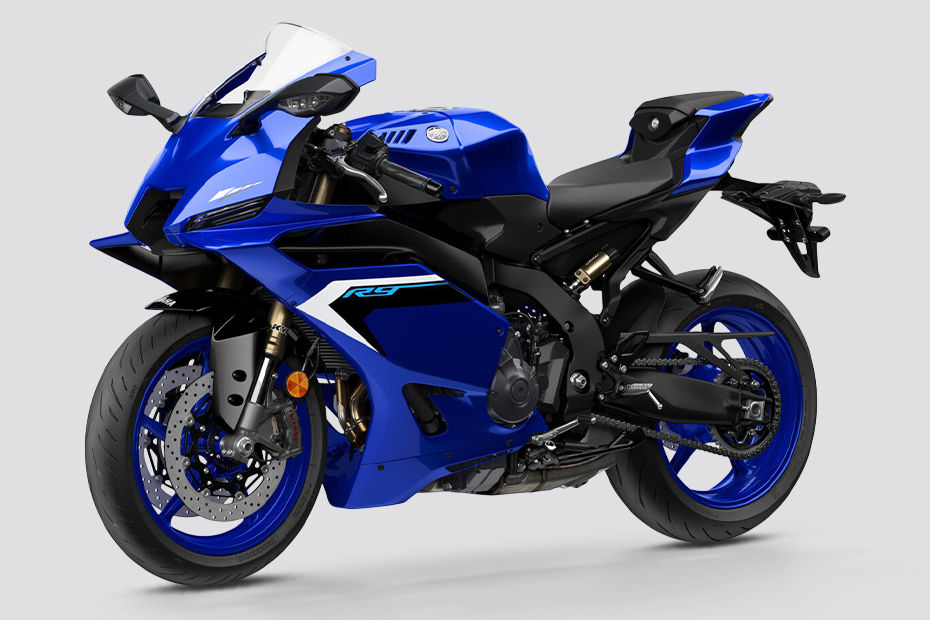
Electronics & 6-Axis IMU Rider Aids: YRC vs APRC
Both manufacturers have endowed these middleweights with comprehensive, MotoGP-derived electronic suites powered by high-speed 6-axis Inertial Measurement Units (IMU):
| Electronic Aid | Yamaha YZF-R9 (YRC) | Aprilia RS 660 (APRC) |
|---|---|---|
| Lean-Sensitive Traction Control | 9-level adjustable (TCS) | 8-level adjustable (ATC) |
| Slide Control System (SCS) | Yes (3 levels) | No (managed via ATC) |
| Wheelie / Lift Control | Yes (LIF – 3 levels) | Yes (AWC – adjustable) |
| Engine Brake Management | Yes (EBM – 2 levels) | Yes (AEB – 3 levels) |
| Bi-Directional Quickshifter | Gen-3 Quick Shift (Standard) | A.P.Q.S (Standard) |
| Cornering ABS & Rear Lift | Brembo Master + Cornering ABS | Multi-map Cornering ABS |
| Cockpit Display | 5-inch full-color TFT + Y-Connect | 5-inch full-color TFT + Aprilia MIA |
| Cruise Control | Standard | Standard |
While Aprilia’s APRC has long been revered as the industry benchmark for intuitive calibration, Yamaha’s integration of a dedicated Slide Control System (SCS)—derived directly from the YZF-R1 superbike—gives aggressive track riders an extra layer of control when drifting the rear tire out of turns under hard throttle.
Street Ergonomics vs Track Day Aggression
If you’re planning to ride your sportbike outside of closed circuits, cockpit ergonomics will dictate your long-term happiness:
- Aprilia RS 660 Ergonomics: Features clip-ons mounted above the top triple clamp and reasonably low footpegs. The riding triangle is pleasantly upright, allowing you to commute through city traffic or ride 300-mile weekend tours without crippling wrist, back, or neck fatigue.
- Yamaha YZF-R9 Ergonomics: Sits squarely between the relaxed posture of the MT-09 naked bike and the extreme torture-rack geometry of the old R6. The clip-ons are mounted below the top triple clamp, placing more body weight onto your wrists and tucking your chest closer to the tank. It feels distinctly more aggressive and committed than the Aprilia—ideal for track sessions, but firmer on daily commutes.
Ownership Costs, Maintenance & Motorcycle Insurance Brackets
For riders looking to buy in the USA, Canada, UK, or India, long-term operating costs are a critical decision factor:
1. Motorcycle Insurance Classification:
Because motorcycle insurance underwriters categorize policies based on engine displacement and risk classification, the Aprilia RS 660 (659cc) frequently falls into the favorable sub-750cc middleweight tier with US carriers like Progressive, GEICO, and State Farm. In contrast, the Yamaha YZF-R9’s 890cc displacement can push it into higher premium brackets for younger or sportbike riders. Expect annual full-coverage insurance premiums on the R9 to run approximately 15% to 25% higher depending on your location, age, and driving record.
2. Dealer Network & Valve Service Intervals:
Yamaha holds a massive logistical advantage in dealer density across North America and global markets. Routine valve clearance inspections on Yamaha’s CP3 motor occur at 26,600 miles (40,000 km), compared to Aprilia’s 12,400-mile (20,000 km) valve check intervals. Over a 3-year ownership cycle, the Yamaha is noticeably cheaper and more accessible to service at local independent shops.
Yamaha YZF-R9 vs Aprilia RS 660: Full Head-to-Head Specifications
| Technical Specification | Yamaha YZF-R9 | Aprilia RS 660 |
|---|---|---|
| Engine Architecture | 890cc Inline-3, DOHC, 4 valves/cyl (CP3) | 659cc Parallel-Twin, DOHC, 4 valves/cyl |
| Crankshaft Design | 120° crossplane crankshaft | 270° firing order |
| Peak Power | 119 hp @ 10,000 rpm | 105 hp @ 10,500 rpm |
| Peak Torque | 93 Nm (68.6 lb-ft) @ 7,000 rpm | 67 Nm (49.4 lb-ft) @ 8,500 rpm |
| Frame Construction | Gravity-cast Aluminum Deltabox | Die-cast Aluminum twin-spar |
| Front Suspension | 43 mm KYB USD fork, fully adjustable | 41 mm KYB USD fork (Öhlins on Factory) |
| Rear Suspension | KYB monoshock, high/low-speed damping | Asymmetric swingarm, monoshock (Öhlins on Factory) |
| Front Brakes | Brembo Stylema 4-piston radial calipers, 320 mm discs | Brembo 4-piston radial calipers, 320 mm discs |
| Kerb Weight (Wet) | 195 kg (430 lbs) | 183 kg (403 lbs) |
| Seat Height | 830 mm (32.7 in) | 820 mm (32.3 in) |
| Fuel Capacity | 14.0 Liters (3.7 gal) | 15.0 Liters (4.0 gal) |
| Base Price (USA MSRP) | $12,499 USD | $11,649 – $11,849 USD ($13,999 Factory) |
| Expected Price (India) | ~₹13.50 lakh – ₹14.50 lakh (ex-showroom) | ₹13.39 lakh (ex-showroom) |
Pricing, Value & The Final Verdict
With an official US base MSRP of $12,499 USD, the Yamaha YZF-R9 lands right in the crosshairs of the standard Aprilia RS 660 ($11,649 to $11,849 USD). For an extra few hundred dollars over the Italian twin, Yamaha gives you:
- +14 horsepower and +26 Nm of muscular mid-range torque.
- Brembo Stylema calipers straight off 200 hp liter-class superbikes.
- A proven Japanese reliability record with 26,600-mile valve intervals and nationwide dealer support.
When to Choose the Aprilia RS 660:
If lightweight agility is your primary metric of riding joy, the RS 660 remains the featherweight king. It is 27 lbs lighter, significantly more comfortable on everyday street commutes, and delivers effortless handling precision that makes amateur track riders feel like seasoned racers.
When to Choose the Yamaha YZF-R9:
If you want blistering supersport acceleration, high-speed aerodynamic stability, track-ready braking hardware, and the visceral symphony of an 890cc crossplane triple, the YZF-R9 is the undisputed performance champion of the new middleweight era.
Which middleweight missile would you park in your garage? Drop a comment below and subscribe to Superbike Photos for our upcoming track comparison video and telemetry breakdown.


