
Table of Contents
Why $500 is the Golden Sweet Spot for Motorcycle Helmets
In the motorcycle gear market, helmet pricing spans a massive spectrum. At the budget entry level ($150 to $250), you typically get heavy injection-molded polycarbonate shells that feel like bowling balls on your neck, noisy wind whistle at highway speeds, and basic foam liners that break down within a single riding season.
At the ultra-exotic ceiling ($900 to $1,400), you enter the realm of pure MotoGP race replicas—helmets like the Shoei X-Fifteen, Arai Corsair-X, and AGV Pista GP RR. While phenomenal on closed circuits, these race lids are brutally stiff, lack integrated sun visors, and offer uncompromising track-tuck ergonomics that prove exhausting on a 300-mile weekend tour.
That leaves the $350 to $500 bracket as the undisputed “Golden Sweet Spot”. In this range, manufacturers deliver multi-composite fiberglass and carbon shells, precision wind-tunnel acoustics, multi-density EPS liners, emergency quick-release cheek pads (EQRS), and optical class-1 Pinlock anti-fog shields—delivering 90% of the safety and luxury of $1,000 race lids at half the price.
The ECE 22.06 Safety Revolution: Why Old Certifications Fall Short
When shopping for a helmet in 2026, the certification badge on the back of the shell is your primary benchmark of life-saving engineering. While basic US DOT FMVSS 218 remains an outdated, self-certified standard largely unchanged since the 1970s, the international standard has officially moved to ECE 22.06.
Under the rigorous ECE 22.06 testing battery:
- Rotational Impact Testing: Helmets are struck against an angled anvil to measure rotational brain acceleration—the primary cause of concussions and traumatic brain injury (TBI).
- Variable-Speed Testing: Helmets must absorb high-speed impacts without shattering and low-speed impacts without transferring dangerous deceleration shocks to the rider’s skull.
- Visor Penetration & Optical Clarity: Shields are shot with high-velocity steel ball bearings to ensure they will not shatter from airborne gravel or debris.
Every helmet featured in this guide complies with these modern rotational and multi-point impact standards, offering world-class head protection whether paired with a modern autonomous motorcycle airbag vest or worn standalone.
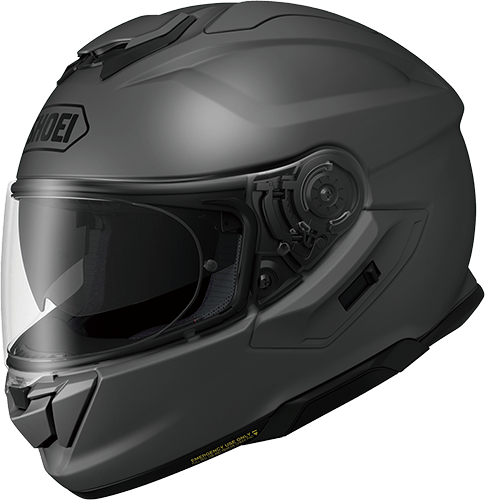
1. Shoei RF-SR ($449) — The Benchmark for Quiet Highway Comfort & Japanese Build Quality
If your chief complaint with your current helmet is deafening wind roar and turbulence at 70 mph, the Shoei RF-SR is the undisputed champion of the sub-$500 category. Handcrafted in Shoei’s dedicated factories in Japan, the RF-SR utilizes the same proprietary AIM+ (Advanced Integrated Matrix Plus) multi-ply organic fiber and fiberglass shell found on Shoei’s flagship touring models.
Key Highlights:
- Aero-Acoustic Mastery: Shoei’s wind tunnel testing produces a hermetically sealed eyeport gasket that completely eliminates low-frequency wind buffeting. It is widely regarded as one of the quietest full-face helmets ever built.
- Snell M2020D & DOT Certified: Meets stringent Snell Memorial Foundation impact standards with a dual-layer, multi-density EPS liner.
- CWR-1 Shield & Pinlock EVO Included: Ships right in the box with a distortion-free Pinlock EVO anti-fog insert that guarantees crystal-clear vision in heavy rain and winter fog.
- Emergency Quick-Release System (EQRS): Allows first responders to gently slide out the cheek pads without placing strain on the rider’s neck after an accident.
The Verdict: For daily street commuting, highway touring, and all-weather durability, the Shoei RF-SR at $449 represents the pinnacle of Japanese craftsmanship under five hundred dollars.
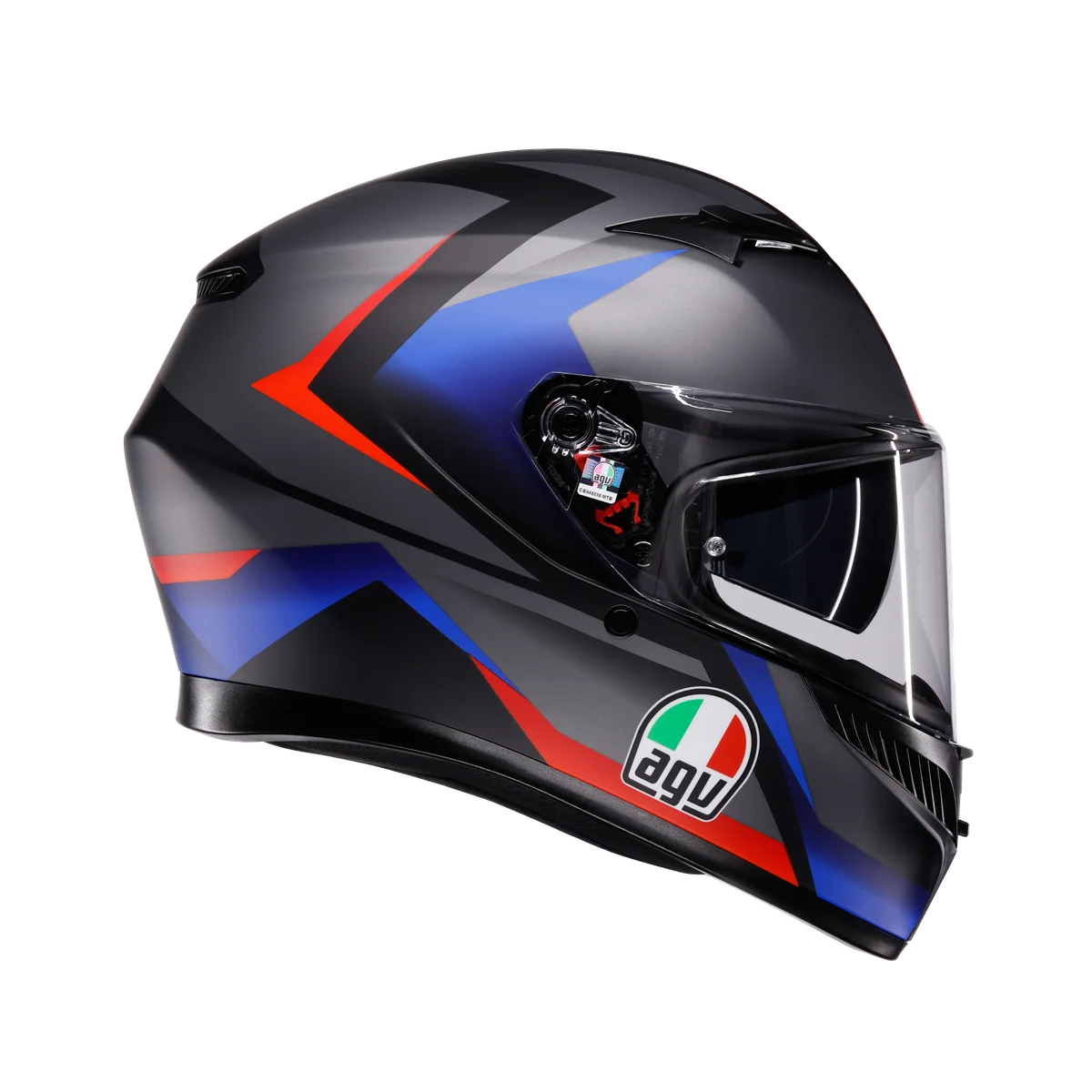
2. AGV K3 (ECE 22.06) ($359 – $399) — Italian Aerodynamics & 190° Panoramic Field of View
Redesigned from the ground up to conquer the strict new ECE 22.06 regulations, the AGV K3 trickles down the aggressive aerodynamic styling and racing pedigree of Valentino Rossi’s legendary Pista GP RR into a street-friendly, feature-packed package.
Key Highlights:
- 190° Ultravision Eyeport: AGV delivers an extraordinary 190-degree horizontal field of vision. You can see cars in your blind spots and spot apex markers without tilting your entire neck.
- Integrated Drop-Down Sun Visor: Smooth lever mechanism drops an internal dark smoke sun visor instantly when riding into direct blinding sunset glare.
- Clavicle Protection Profile: The base edge of the high-resistance thermoplastic shell is specifically curved and cushioned to prevent collarbone fractures during severe head rotations.
- Aerodynamic Wedge Spoiler: Designed to achieve zero aerodynamic lift at 80 mph, taking strain off your neck muscles during long rides.
The Verdict: At $359 to $399, the AGV K3 is the sharpest-looking Italian street helmet for naked bike and sport-touring riders who crave aggressive styling and wide-angle situational awareness.
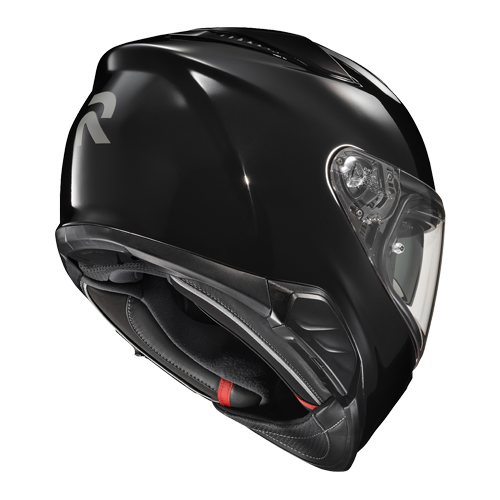
3. HJC RPHA 71 ($399 – $459) — The Feature-Packed Carbon-Matrix Sport-Touring Leader
HJC is the largest helmet manufacturer in the world, and their flagship “RPHA” (Revolutionary Performance Helmet Advantage) series represents their finest engineering. The HJC RPHA 71 is engineered specifically for riders who want premium materials without paying four-figure prices.
Key Highlights:
- P.I.M. EVO Shell Construction: Made from a sophisticated sandwich of carbon fiber, aramid (Kevlar), fiberglass, and organic non-woven fabric. This yields exceptional shock absorption while maintaining a lightweight profile.
- 3-Position Adjustable Sun Shield: Unlike basic binary sun visors, the RPHA 71 allows you to adjust the depth of the sun visor across 3 steps to fit any nose bridge geometry without interference.
- Wind-Tunnel Baffle Aerodynamics: HJC conducted extensive aero-acoustic wind tunnel testing, adding curved chin curtains and lower neck-roll seals to drastically reduce low-end turbulent wind drone.
- Smart HJC 2nd Gen Bluetooth Ready: Seamless internal housing cavities allow flush integration of Sena-powered Smart HJC mesh communication systems.
The Verdict: If you want every conceivable luxury feature—carbon-hybrid shell, internal sun visor, speaker pockets, and ECE 22.06 certification—the HJC RPHA 71 punches way above its price point.
4. Scorpion EXO-R1 Air ($399 – $429) — Track-Bred Apex Predator with AirFit Inflatable Fit
Worn by MotoGP World Champions like Fabio Quartararo, the Scorpion EXO-R1 Air brings genuine premier-class racing technology down to a shocking $399 retail price. While most sub-$500 helmets are street-biased, the EXO-R1 Air is a purebred track-day weapon.
Key Highlights:
- Ultra-TCT Fiberglass Composite: Developed exclusively by Scorpion, the thermodynamic composite matrix crumples progressively under impact to absorb maximum kinetic energy.
- AirFit Inflatable Cheek Pad System: Features an integrated miniature air pump behind the chin bar. Riders can inflate internal air bladders behind the cheek pads for a personalized, vice-grip custom race fit that completely eliminates helmet lift at 140+ mph.
- Featherweight 3.05 lbs: Weighs nearly half a pound less than conventional street helmets, massively reducing neck fatigue during track days.
- Dual Visors in the Box: Ships with both a clear shield AND an authentic dark smoke race shield with tear-off posts, saving you $70 right out of the box.
The Verdict: For sportbike riders, canyon carvers, and track-day devotees who prioritize featherweight mass, aggressive head positions, and a customized anti-buffeting fit, nothing beats the Scorpion EXO-R1 Air under $500.
5. Bell Star DLX MIPS ($499) — Tri-Matrix Shell with Rotational MIPS & ProTint Photochromic Visor
The Bell Star lineage invented the full-face helmet in 1967. The latest Bell Star DLX MIPS sits right at the $499 limit, packing high-end American engineering and unmatched rotational safety tech.
Key Highlights:
- Integrated MIPS (Multi-Directional Impact Protection System): A low-friction slip plane inside the EPS allows the helmet to slide 10 to 15 mm relative to the head during angled impacts, redirecting rotational violence away from brain tissue.
- Tri-Matrix Composite Shell: Blends Aramid, carbon fiber, and fiberglass for exceptional penetration resistance and lightweight strength.
- Panovision ProTint Photochromic Visor ($160 Value Included): Automatically transitions from crystal clear at night to deep dark smoke in bright sunlight in under 15 seconds, eliminating the need to ever carry a spare visor or swap sunglasses.
- Eyewear Compatible: Dedicated internal eyeglass channels eliminate arm-pinching pressure points for riders with prescription glasses.
The Verdict: Between MIPS rotational brain protection and the included $160 self-tinting photochromic visor, the Bell Star DLX MIPS delivers supreme long-term value for safety-conscious riders.
Comprehensive Comparison Matrix: The 5 Best Helmets Under $500
| Helmet Model | Shell Construction | Safety Rating | Weight (Approx) | Internal Sun Shield? | Primary Strength | USA MSRP |
|---|---|---|---|---|---|---|
| Shoei RF-SR | AIM+ Multi-Ply Fiberglass | Snell M2020D / DOT | 3.48 lbs (1,578g) | No (Pinlock Included) | Quietest Wind Acoustics & Build Quality | $449 USD |
| AGV K3 (22.06) | High-Resistance Thermo | ECE 22.06 / DOT | 3.30 lbs (1,496g) | Yes (Drop-Down) | 190° Ultravision & Italian Aero | $359 – $399 USD |
| HJC RPHA 71 | P.I.M. EVO Carbon-Aramid | ECE 22.06 / DOT | 3.50 lbs (1,587g) | Yes (3-Way Adj.) | Feature-Packed Sport-Touring Tech | $399 – $459 USD |
| Scorpion EXO-R1 Air | Ultra-TCT Composite | ECE 22.06 / DOT | 3.05 lbs (1,383g) | No (Dark Smoke Included) | Lightest Weight & AirFit Race Fit | $399 – $429 USD |
| Bell Star DLX MIPS | Tri-Matrix Composite | DOT / Snell / ECE | 3.45 lbs (1,565g) | ProTint Transitions | MIPS Rotational Tech & Self-Tint Visor | $499 USD |
How to Choose by Head Shape & Riding Discipline
Even the most expensive helmet is useless if it does not match your anatomical head shape:
- Intermediate Oval (Longer front-to-back than side-to-side — 80% of riders): The Shoei RF-SR, HJC RPHA 71, and Scorpion EXO-R1 Air fit this profile flawlessly, preventing painful forehead hotspots during 4-hour rides.
- Round Oval (More circular head profile): The AGV K3 and Bell Star DLX provide slightly more width near the temples, offering a pressure-free fit for wider head shapes.
- Track Days & Canyon Carving: Choose the Scorpion EXO-R1 Air for its featherweight 3.05 lb mass and inflatable cheek pads.
- Commuting & Highway Touring: Choose the Shoei RF-SR for supreme soundproofing, or the HJC RPHA 71 if you require an internal sun shield and Bluetooth mesh integration.
The Final Verdict: Which Sub-$500 Helmet Wins in 2026?
You no longer need to spend $1,000 to get MotoGP-caliber impact dissipation and quiet aerodynamics. If your priority is maximum peace, quiet, and handcrafted durability, the Shoei RF-SR ($449) remains the benchmark standard of the industry. If you crave lightweight track performance with dual visors in the box, the Scorpion EXO-R1 Air ($399) is the biggest bargain in motorsport safety. And if you demand a do-it-all sport-touring lid with a drop-down sun visor and carbon-matrix construction, the HJC RPHA 71 ($399) takes the crown.
Pairing your helmet with the right gear? Check out our definitive guide to the Best Motorcycle Airbag Vests of 2026 and our comprehensive analysis of Superbike Ownership & Insurance Costs in the USA.


